Most homeowners think about hot water only when it runs out. The choice of a water heater electric system rarely comes down to the tank alone. Water pressure, fixture count, panel capacity, and the age of the supply lines all pull at that decision, and skipping any of them shows up later.
Hot Water Demand Writes the Spec Sheet
Sizing Built around Real Household Use: A four-person household running two showers back to back needs more recovery than a couple living in a smaller place. A water heater electric unit sized on square footage instead of actual draw leaves someone standing in cold water by the second rinse. Fixture count and peak-hour demand carry more weight than floor plans.
Water Quality and the Load It Adds: Phoenix water carries minerals that settle at the bottom of a tank and shorten its life. Water conditioning handles that problem upstream, cutting the scale that coats elements and forces longer heating cycles. Homes on hard supply lines see the difference within a few years, sometimes sooner, and the repair bill arrives without warning.
One Decision, Not Two Separate Ones
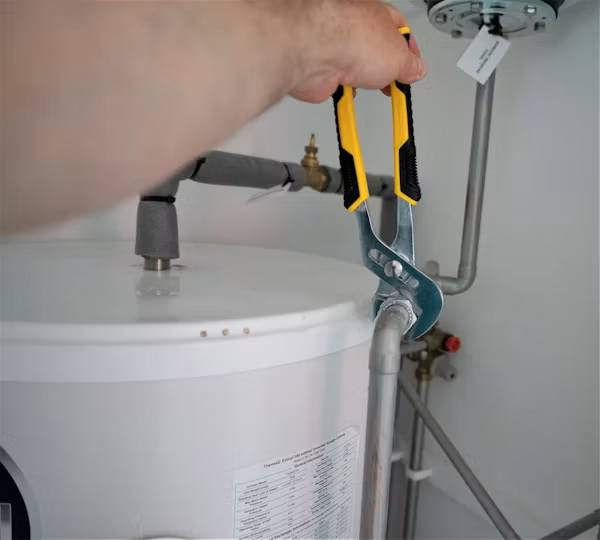
Where the Unit Choice Meets the Install Plan: Picking a tank first and figuring out the hookup later creates problems that cost more to undo. Thermal expansion inside a closed system needs somewhere to go, which means the expansion tank, the shutoff valve, and the relief line get planned alongside the unit itself. Not after it lands in the garage.
Panel Capacity Checked before Purchase: Older homes sometimes lack the breaker space or wire gauge a modern unit draws. A water heater electric upgrade can stall at the panel, and finding that out on installation day wastes a morning. An electrician checks the service rating first, then the plumbing side moves forward with something that will actually run.
What a Highly Trained Crew Handles on Install Day
Removal, Connections, and Leak Testing: Draining and hauling out an old tank is the easy part. Connections get checked for leaks, the circuit gets verified under load, and water pressure regulation keeps the new unit from taking a beating every time a valve slams shut. Everything gets tested twice before the crew packs up.
- Household size and how many people shower inside the same hour
- Fixture count, including a soaking tub or a second dishwasher
- Panel capacity, and whether the breaker box has room left
- Water hardness, which shortens tank life faster than most people expect
- Clearance around the unit so service access is not a wrestling match later
Code Compliance Verified at Inspection: Permits and inspections exist for a reason, and a failed one surfaces when a house goes on the market. Drain pan placement, clearance around the unit, and the relief line termination all get written into code. Water conditioning equipment installed at the same time needs its own bypass and drain path, planned ahead of the rough-in.
Hot Water Nobody Has to Think About
A tank that fits the house does its work quietly for years, and nobody thinks about it again until replacement time comes around. That is the point. Book a sizing visit with a highly trained plumbing team before the current unit gives out, and let the install get planned properly the first time. Call 833-628-6440 to get started.
