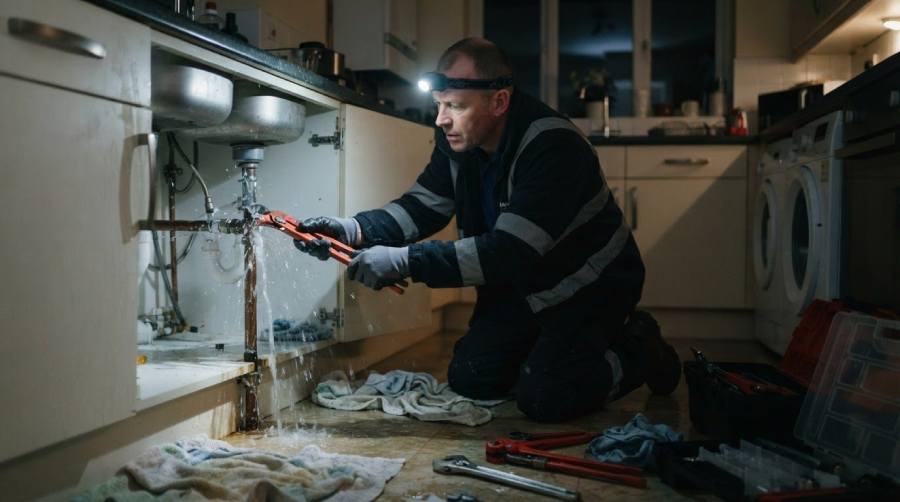
A burst pipe can turn a minor household fault into serious water damage within minutes. Knowing what to isolate, whom to call and what information to provide can reduce risks to people, electrics, floors and furnishings.
When searching for 247 emergency plumbers uk, focus first on the nature and location of the fault rather than choosing solely on a headline response time. A genuine emergency plumber should explain availability, likely charges and immediate safety measures before attendance.
This guide covers urgent plumbing failures across England, Scotland, Wales and Northern Ireland, including overnight, weekend and bank-holiday call-outs. Availability varies by postcode, so confirm coverage before authorising work.
Is the Plumbing Problem an Emergency?
Immediate assistance is generally appropriate when a fault threatens property, health or essential services. Typical examples include:
- A burst pipe or uncontrolled leak that cannot be stopped.
- Sewage entering a property, overflowing toilets or contaminated wastewater backing up through drains.
- Flooding close to sockets, consumer units, boilers or other electrical equipment.
- A failed stopcock, tank, pump or valve that prevents essential water supplies from being controlled.
- A major leak from a hot-water cylinder, boiler circuit or central-heating pipework.
A dripping tap, slow basin, noisy radiator valve or isolated toilet cistern usually requires a routine appointment, provided there is no flooding or loss of essential facilities. A blocked drain may be urgent if several fixtures are affected, wastewater is rising or an external manhole is overflowing.
If safe, close the internal stopcock, commonly located beneath a kitchen sink, near the water meter or where the service pipe enters the property. In flats, the isolation valve may be in a communal cupboard. Do not force a seized valve; a plumber may need to isolate the supply elsewhere.
Never touch electrical appliances, switches or sockets while standing in water. Keep children and pets away from sewage or greywater, avoid skin contact and ventilate the area only if doing so is safe. If water is near electrics, leave the area and contact the electricity network or emergency services as appropriate.
A suspected gas leak or carbon-monoxide incident is not simply a plumbing call-out. Turn off the gas at the emergency control valve only if it is safe, avoid flames and electrical switches, leave the property and call the National Gas Emergency Service on 0800 111 999 in Great Britain. In Northern Ireland, contact the relevant regional gas emergency number. For immediate danger, call 999.
24/7 Emergency Plumbing Services Across the UK
“24/7” can mean a local engineer on standby, an answering service that allocates jobs, or a network covering selected postcode districts. Ask where the attending engineer is based, whether the quoted service area includes your postcode and whether an out-of-hours call is handled directly.
Common emergency work includes:
- Burst pipes, leaking appliances and major water leaks.
- Blocked toilets, sinks, soil stacks and internal drains.
- Sewage backups, overflowing manholes and foul-water drainage problems.
- Faulty stopcocks, float valves, pumps, tanks and pressure-reducing valves.
- Boiler, hot-water and central-heating plumbing faults.
- Temporary repairs after frost, storms, accidental damage or failed fittings.
A plumber may diagnose a leak with pressure testing, moisture meters, thermal imaging or visual inspection. Drainage specialists may use inspection cameras, jetting equipment or mechanical augers. Excavation, shared drains and damaged underground services may require a separate contractor or utility provider.
Response times depend on severity, traffic, weather, engineer availability, parking and access. Rural areas, island communities and dense urban areas can each create different delays. Freezing weather can generate simultaneous burst-pipe calls, while heavy rain may overwhelm local drainage networks. No responsible provider should guarantee an arrival time without checking the postcode and current workload.
What Happens During an Emergency Call-Out?
During the first call, provide:
- Your postcode, address and property type.
- The exact symptoms, such as a ceiling leak, overflowing toilet or loss of pressure.
- Whether the water supply has been isolated.
- Whether standing water is near electrics or heating equipment.
- Access instructions, parking restrictions, entry codes and the presence of tenants, children or vulnerable occupants.
A sensible response normally follows this sequence:
- Triage: The call handler assesses danger, contamination, access and whether another emergency service is required.
- Allocation: An engineer is assigned and an estimated arrival window is given, subject to availability.
- Diagnosis: The plumber identifies the failed component and traces the source rather than repairing only the visible symptom.
- Isolation and making safe: Water, heating or a damaged section of pipework is isolated to prevent further loss.
- Repair: The engineer either completes the repair with suitable parts or installs a temporary solution pending specialist work.
- Testing and records: Pipework is repressurised, fixtures are tested and the customer receives an invoice or written record.
Making-safe work may involve a temporary compression fitting, capped pipe, isolation valve or drain-down. This can be the safest overnight option when a replacement cylinder, bespoke part, access panel or excavation is needed.
Landlords and tenants should check responsibility under the tenancy agreement and notify the landlord or managing agent promptly. In a block of flats, a leak may involve communal risers, another dwelling or a facilities manager. Photograph damage before clean-up where possible and notify insurers if the policy requires it.
Emergency Plumber Costs, Call-Out Fees and Payment
There is no single UK emergency rate. As a broad consumer benchmark, daytime plumbing labour may fall around £50–£100 per hour, while evenings, weekends and bank holidays can rise to roughly £80–£150 or more. London and other high-cost areas may exceed these figures; specialist drainage or heating work can cost more.
A final bill may combine:
- A call-out or diagnosis fee.
- Labour charged hourly, in blocks or at a fixed price.
- Parts such as valves, traps, flexible connectors, pumps or pipe fittings.
- Travel, congestion charges, parking or extended-distance attendance.
- Specialist equipment, jetting, camera inspection, access work or excavation.
- VAT, where applicable.
Before attendance, ask whether the quoted figure includes VAT, a minimum charge, diagnosis, travel, materials and follow-up visits. Request the company’s legal identity, payment methods and cancellation terms. For additional non-urgent work, obtain a written estimate and approve it before work starts.
A temporary repair may cost less initially but leave a separate quotation for permanent replacement. For example, isolating a failed hot-water component may restore safety while a later visit is arranged for cylinder, pump or control replacement. The engineer should explain the limitation and expected next step.
Choosing a Reliable 24-Hour Plumber
Check that the provider has a verifiable business identity, clear service area, public liability insurance and relevant experience. Reviews are useful, but assess patterns across independent platforms rather than relying on testimonials published only on the provider’s own website.
A reliable out-of-hours service should:
- Answer calls or provide a genuine escalation route overnight.
- Explain the attendance charge and pricing basis clearly.
- Confirm whether it handles plumbing, drainage, heating or commercial systems relevant to the fault.
- Provide an engineer’s name or company identification before entry.
- Offer an invoice describing labour, parts and work completed.
Be cautious about vague “from” prices, pressure to replace equipment immediately, demands for unexplained cash payments and businesses that will not disclose their legal identity. Ask for evidence of insurance if extensive work is proposed.
Gas appliance work, including work on a gas boiler, must be carried out by an engineer registered with Gas Safe. Gas registration does not automatically verify every plumbing or drainage capability, so check the contractor’s broader qualifications and insurance separately. Plumbing credentials differ across the UK and are not equivalent to a universal statutory plumber licence.
Emergency Plumbing FAQs for UK Homeowners
What is classed as a plumbing emergency?
A burst pipe, uncontrollable leak, sewage backflow, flooding near electrics or loss of essential water control is normally urgent. A minor drip or slow drain can usually wait if it is contained and causing no health or property risk.
How much should I pay for an emergency plumber?
Expect a premium for night, weekend and bank-holiday attendance. Ask for the call-out, labour basis, VAT position, travel, minimum charge and parts policy before agreeing. A complex drainage or heating fault may cost considerably more than a simple valve replacement.
How much do UK plumbers charge per hour?
Routine daytime labour is often approximately £50–£100 per hour, with emergency rates commonly around £80–£150 or more. Regional costs, specialism, parking and the engineer’s pricing model affect the figure.
How much would a plumber charge for three hours of work?
Three hours could mean roughly £150–£450 in labour using those broad benchmarks, before a call-out fee, parts, VAT, travel or specialist equipment. A fixed-price emergency repair may not follow an hourly calculation, so confirm the structure in writing.
What should I do before the plumber arrives?
Isolate the water if safe, keep away from contaminated water, avoid electrics near flooding, protect belongings, photograph damage and clear access to the stopcock and affected area. Keep children and pets away, notify the landlord or insurer where relevant, and have the engineer’s contact details available.
